What Is Male Pattern Baldness?
Male pattern baldness (known medically as androgenetic alopecia) is the most common cause of hair loss in men. It typically begins with gradual thinning at the temples or crown and, over time, can progress to significant hair loss across the top of the scalp. The process is slow, often spanning years or decades, which means it is easy to dismiss in its early stages.
Many men across Birmingham, Selly Oak, Harborne, Edgbaston, Bournville, Moseley and beyond notice the first signs in their twenties or thirties but put off taking action. Some feel it is not worth addressing, or they are simply unsure what options are actually available to them. This article sets out to change that, not to push you towards any particular treatment but to give you clear, honest information about what is happening and what your choices are.
Hair loss is not a medical emergency, and deciding to do nothing is a completely valid choice. But if it bothers you, knowing your options early puts you in the best possible position to act on it.
Male pattern baldness is driven by genetics and hormones. It follows a predictable pattern and cannot be permanently reversed. However, there are evidence-based treatments that can slow its progression and improve hair density in thinning areas, and they tend to work best when started while follicles are still active.
What Causes It?
The Role of DHT
The primary driver of male pattern baldness is a hormone called dihydrotestosterone, or DHT. DHT is a byproduct of testosterone that is produced naturally in the body. In men with a genetic predisposition to hair loss, hair follicles on the scalp are sensitive to DHT, meaning they react to it in a way that causes them to shrink over time.
This process is called follicular miniaturisation. Each hair growth cycle, the affected follicles produce thinner, shorter hairs. Eventually, if left untreated, those follicles may stop producing visible hair altogether. Crucially, the follicles are not necessarily dead, they have simply gone dormant, which is why early intervention can be more effective than waiting.
The Genetics Factor
Androgenetic alopecia is strongly hereditary. You can inherit the tendency from either side of the family; the common belief that it only comes from the mother's father is a myth. If close male relatives have experienced significant hair loss, your risk is higher, though the pattern and age of onset can differ considerably from one person to the next.
Understanding the Norwood Scale
The Norwood–Hamilton scale is the most widely used tool for classifying male pattern baldness. It runs from Stage 1, where there is no visible hair loss, through to Stage 7, where hair loss is confined to a horseshoe-shaped band on the sides and back of the head. The scale helps practitioners assess the extent of loss and determine which treatments are likely to be appropriate.
- Stages 1–2: Early recession at the temples; the hairline beginning to move back.
- Stages 3–4: Deeper recession and thinning at the crown becoming noticeable.
- Stages 5–6: The temple recession and crown thinning begin to merge.
- Stage 7: Extensive loss across the top; only the sides and back remain dense.
Most non-surgical treatments (including PRP) are most effective at Stages 2 to 5, where there are still active follicles to work with. This does not mean later-stage treatment is without value, but the scope of what is achievable does narrow as loss advances.
Does It Matter When You Start Treatment?
In short: yes, timing matters. Hair loss treatments (whether medical or procedural) work by supporting and stimulating existing follicles rather than creating entirely new ones. The more follicles that are still active, even if weakened, the more a treatment has to work with.
This does not mean that seeking help at a later stage is pointless. Many men at Stage 4 or even 5 still respond well to PRP and other treatments, particularly when it comes to improving density in areas that are thinning rather than completely bare. But the results achievable at Stage 2 or 3 are generally more significant, because more follicles remain capable of responding.
There is also a practical psychological dimension. Hair loss tends to bother men more the further it progresses. Addressing it earlier, when the change is still subtle, means spending less time feeling self-conscious, and having more options to choose from.
The conversation does not have to start with "I've lost a lot of hair." It can start with "I've noticed some thinning and I want to understand my options." That is what a consultation is for.
Non-Surgical Treatment Options
There is a broad range of approaches to male pattern baldness, from over-the-counter products through to prescription medications and clinic-based procedures. Understanding what each does (and what it does not do) helps you make a decision that fits your situation.
Topical Minoxidil
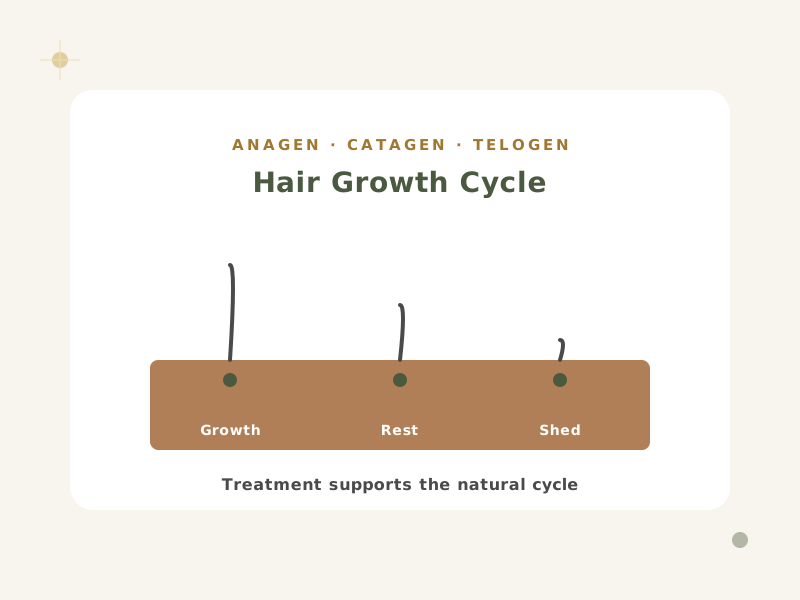
Minoxidil is applied directly to the scalp and works by prolonging the growth phase of the hair cycle and improving blood flow to follicles. Available without prescription in most pharmacies, it is typically the first thing men try. It requires consistent, ongoing use; stopping it usually leads to the loss of any gains made. Results vary between individuals, and minoxidil does not address the underlying DHT-driven miniaturisation process.
Oral Finasteride
Finasteride is a prescription-only oral medication that works by blocking the enzyme responsible for converting testosterone to DHT, thereby reducing the hormonal signal that drives follicle miniaturisation. It is considered one of the more effective medical approaches for androgenetic alopecia in men. Like minoxidil, it requires ongoing use to maintain results. A GP or prescribing practitioner should be consulted before starting finasteride, as it is not appropriate for everyone.
PRP Hair Restoration
Platelet-rich plasma (PRP) therapy is a clinic-based procedure that uses your own blood (specifically the growth-factor-rich plasma separated from it) to stimulate hair follicle activity. It addresses hair loss at a biological level, encouraging follicles to sustain and re-enter the growth phase. PRP can be used on its own or alongside other treatments such as minoxidil or finasteride to enhance overall results.
Scalp Microneedling
Scalp microneedling creates controlled micro-channels in the scalp skin, which can improve the absorption of topical treatments and stimulate the scalp's natural repair processes. It is often combined with PRP or topical minoxidil rather than used alone as the primary treatment for hair loss.
Book a £25 consultation at Regener8 Aesthetics in Selly Oak, Birmingham. We assess your pattern of hair loss and talk through every appropriate option. The consultation fee is fully redeemable against any treatment booked within 30 days. Consultations available in English, Farsi and Russian.
Finance available, subject to approval, via our Payl8r finance partner.
PRP for Male Hair Loss: What to Expect
PRP hair restoration at Regener8 Aesthetics follows a straightforward process. Here is what a typical appointment looks like from start to finish.
The Blood Draw
A small amount of blood is taken from your arm, similar in volume to a standard blood test. The process takes only a minute or two and causes minimal discomfort.
Centrifugation
The blood sample is placed in a centrifuge, which spins it at high speed to separate its components. This isolates the platelet-rich plasma: the fraction that contains a concentrated supply of growth factors involved in tissue repair and cell regeneration.
Scalp Preparation
A topical anaesthetic cream is applied to the treatment area to minimise discomfort during the injections. This is left on for a period before the procedure begins, ensuring the scalp is comfortable for treatment.
The Injections
The prepared PRP is injected into the scalp at regular intervals across the thinning areas. Most clients describe the sensation as mild to moderate pressure rather than sharp pain. The injection phase typically takes around 20 to 30 minutes depending on the size of the area being treated.
Aftercare
There is no significant downtime. Some mild redness or tenderness on the scalp is normal and usually settles within 24 to 48 hours. Your practitioner will provide specific aftercare guidance, which typically includes avoiding vigorous exercise, direct heat to the scalp, and certain hair products for a day or two.
PRP uses your own blood plasma, which significantly reduces the risk of adverse reactions compared with injectable treatments that introduce foreign substances. It is a well-tolerated procedure when carried out by a trained practitioner in a clinical environment. At Regener8 Aesthetics, all PRP treatments are performed with proper sterile technique.
What Results Are Realistic?
This is the question most men want answered honestly, and it deserves a straight answer: PRP is not a cure for male pattern baldness. It does not permanently halt the hormonal process that drives hair loss, and it will not produce outcomes equivalent to a hair transplant in areas of advanced loss.
What PRP can do, particularly with a consistent course of treatment:
- Slow the rate of ongoing hair loss by supporting follicle health and reducing shedding.
- Improve hair density and thickness in areas that are thinning but still active.
- Stimulate dormant follicles that have reduced (but not entirely stopped) hair production.
- Complement other treatments such as minoxidil or finasteride, potentially strengthening their effect.
Results are gradual. Most men notice an improvement in hair texture and a reduction in shedding after completing an initial course of three to four sessions, with visible density improvements typically becoming apparent over the following months. Hair growth cycles are slow, and PRP works with those natural cycles rather than bypassing them.
Maintenance sessions (typically one to two per year) are recommended to sustain the improvements. Without them, the underlying process of androgenetic alopecia continues, and the benefits of earlier treatment will diminish over time.
The single most important factor in setting realistic expectations is an honest assessment of where you are starting from. That is precisely what a consultation is for: a clear picture of your hair loss pattern, a frank conversation about what is achievable, and a plan that fits your goals and circumstances, without any pressure to commit on the day.
Frequently Asked Questions
- Male pattern baldness is caused by DHT acting on genetically sensitive follicles; it is a gradual, progressive process driven by heredity, not something you have done wrong.
- The Norwood scale provides a practical framework for assessing how far hair loss has progressed and determining which treatments are most appropriate at each stage.
- Non-surgical options including PRP, minoxidil, and finasteride can slow progression and improve density, but work best when follicles are still active; earlier is generally better.
- PRP uses your own blood plasma to deliver growth factors directly to the scalp; it is well-tolerated and can be combined with other treatments for stronger outcomes.
- A £25 consultation at Regener8 Aesthetics gives you an honest assessment of your hair loss and a clear picture of what is realistic, with no obligation to proceed.
Related Treatments at Regener8 Aesthetics
Related Articles
A conversation about your hair loss does not have to be a big deal. Book a £25 consultation at Regener8 Aesthetics in Selly Oak, serving clients from Harborne, Edgbaston, Bournville, Moseley, Northfield and across Birmingham. Consultations available in English, Farsi and Russian.
Finance available, subject to approval, via our Payl8r finance partner.