Noticing more hair than usual on your pillow, in the shower drain, or coming away on your brush can be an unsettling experience. For many people across Birmingham, in Selly Oak, Bournville, Edgbaston, Harborne, Moseley, Kings Heath and further afield, that increased shedding turns out to be telogen effluvium: a temporary, reactive form of hair loss that is far more common than most people realise. The good news is that, in the great majority of cases, it resolves with time and the right support. This article explains what is happening, why it happens, and what options are available if you would like to give your recovery a helping hand.
What Is Telogen Effluvium?
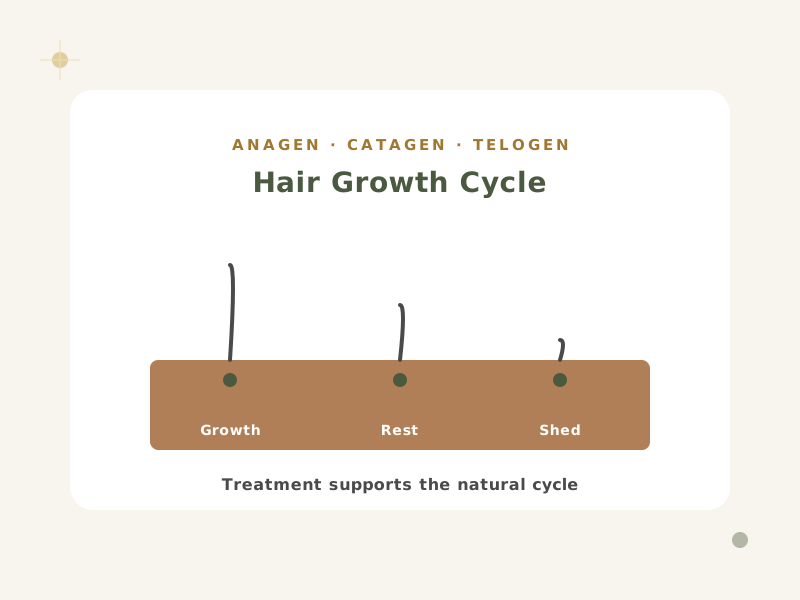
Every strand of hair on your scalp follows a cyclical pattern of growth. The active growing phase (known as anagen) lasts anywhere from two to seven years for a given follicle. This is followed by a brief transitional phase (catagen) and then a resting phase called telogen, which ordinarily lasts around three months before the old hair sheds and a new one begins to grow in its place. At any one time, roughly eighty to ninety per cent of your hair is in the anagen phase, with the remaining ten to twenty per cent resting in telogen.
Telogen effluvium occurs when a significant number of follicles are pushed prematurely out of the anagen phase and into telogen simultaneously, in response to some form of physical or emotional stress on the body. When those hairs all shed at roughly the same time (typically two to four months after the triggering event) the result is a noticeable, sometimes alarming increase in daily hair loss. Because many follicles are affected at once rather than just a handful, the shedding can feel dramatic even though the underlying process is a protective, reversible one.
Telogen effluvium is a reactive, temporary disruption to the hair growth cycle, not a disease of the follicle itself. The follicles remain intact and capable of regrowth once the triggering cause has passed. Understanding this distinction is an important first step in approaching recovery with confidence rather than alarm.
Common Triggers
Because telogen effluvium is essentially the body's response to stress, a wide variety of physical and emotional events can set it in motion. The shedding typically begins two to four months after the trigger, which can make it difficult to connect cause and effect; you may be feeling considerably better by the time the hair loss starts.
Physical Stress and Illness
Any significant physical shock to the body can disrupt the hair cycle. High fevers (including those associated with viral infections), major surgery, prolonged hospital stays, and serious injuries are all established triggers. The body responds to these events by redirecting resources away from non-essential functions such as hair growth and towards the immediate task of healing.
Emotional and Psychological Stress
Sustained psychological stress, whether from a bereavement, relationship breakdown, workplace pressure, or periods of intense anxiety, can also push follicles into the resting phase early. The biological pathway is thought to involve stress hormones such as cortisol, which can interfere with the signals that keep follicles in the active growth phase. This form of telogen effluvium can be particularly difficult to identify because the triggering period of stress may have already passed by the time shedding becomes noticeable.
Postpartum Hair Loss
Postpartum hair loss is among the best-known forms of telogen effluvium, occurring in the months following childbirth. During pregnancy, elevated oestrogen levels extend the anagen phase, so many women enjoy thicker, fuller hair. After delivery, oestrogen levels drop sharply, and a large number of those follicles enter telogen together. The resulting shed (typically beginning two to four months postpartum) can feel alarming but is a normal physiological response and usually resolves within six to twelve months without intervention.
Nutritional Deficiencies
Hair is metabolically demanding, and the follicle is sensitive to nutritional shortfalls. Low levels of ferritin (stored iron), vitamin D, zinc, and B vitamins, particularly biotin and B12, are among the deficiencies most commonly associated with increased shedding. Crash dieting, very restrictive eating patterns, or rapid significant weight loss can also trigger telogen effluvium by depriving the body of the nutrients needed to sustain healthy follicle function.
Hormonal Changes and Medical Conditions
Thyroid dysfunction (both hypothyroidism and hyperthyroidism) is a well-known cause of diffuse hair shedding and should be investigated when hair loss is persistent. Changes in hormonal contraception, coming off the pill, and conditions such as polycystic ovary syndrome (PCOS) can also contribute. This is why a medical assessment is an important part of the picture, particularly when shedding does not resolve as expected.
How to Tell It Apart from Other Types of Hair Loss
Not all hair loss is the same, and understanding what type you are experiencing matters, both for knowing what to expect and for choosing the most appropriate response.
Androgenetic alopecia (male or female pattern hair loss) is a different condition driven by genetic sensitivity to androgens. It tends to follow a predictable pattern, with gradual thinning at the crown and temples in men and a diffuse widening of the parting in women, and it is progressive rather than reactive. It does not follow a triggering event and does not resolve on its own without treatment.
Alopecia areata presents as patchy, well-defined circular areas of hair loss and is an autoimmune condition in which the immune system targets hair follicles. It is distinct from telogen effluvium and requires a different clinical approach.
Telogen effluvium, by contrast, tends to present as a generalised, diffuse shed across the whole scalp rather than a patterned thinning or distinct patches. There is usually a clear triggering event in the preceding two to four months. The hair that sheds in telogen effluvium often has a small white bulb at the root, this is the telogen bulb, confirming the hair has completed its resting phase rather than breaking off mid-shaft. If you are uncertain about which type of hair loss you are experiencing, a professional assessment will help to clarify the picture and guide next steps.
If you are concerned about hair shedding and would like a professional assessment, our £25 consultation is a relaxed, no-pressure way to understand your options. The fee is fully redeemable against any treatment within 30 days. Consultations available in English, Farsi and Russian.
Finance available, subject to approval, via our Payl8r finance partner.
Will My Hair Grow Back on Its Own?
For the vast majority of people experiencing telogen effluvium, the answer is yes; the hair will grow back once the underlying trigger resolves and the body has had time to recover. Because the follicles themselves are not damaged or destroyed, they retain their full capacity for regrowth. Once the triggering stress has passed and the cycle is allowed to normalise, follicles begin to re-enter the anagen phase and new hair growth follows.
In practice, this means that the shedding phase usually peaks two to four months after the trigger and then begins to slow and stabilise. Visible regrowth typically follows over the subsequent three to six months, so most people see meaningful improvement within six to twelve months of the triggering event passing. Short, fine regrowth hairs along the hairline and parting are often one of the first and most reassuring signs that recovery is underway.
It is worth being patient with this process. The hair growth cycle is measured in months, not weeks, and expecting visible change sooner than the biology allows can lead to unnecessary anxiety. That said, there are things that can support the recovery process, from addressing any underlying nutritional deficiencies to exploring treatments that may encourage follicles to return to active growth sooner.
If shedding has continued for more than six months without signs of improvement, or if it is accompanied by other symptoms such as persistent fatigue, skin changes, or changes in your menstrual cycle, it is important to consult your GP to investigate potential underlying medical causes. Persistent hair loss that does not follow the expected pattern of telogen effluvium may have a different origin that requires specific medical management.
How Can Aesthetic Treatments Help?
While telogen effluvium often resolves naturally, some people choose to take a more proactive approach to supporting their recovery, particularly if the shedding has been severe, prolonged, or emotionally distressing. Aesthetic treatments can play a supportive role in encouraging the scalp environment and follicle activity, even in cases where the underlying cause has already passed.
PRP Hair Restoration
Platelet-rich plasma (PRP) therapy is one of the most well-regarded supportive options for hair loss at Regener8 Aesthetics. The treatment involves drawing a small amount of your own blood, processing it to concentrate the platelet-rich fraction, and then delivering this plasma to the scalp via fine injections. Platelets are rich in growth factors: naturally occurring proteins that play a role in tissue repair and cell signalling. When introduced to the scalp, these growth factors may help to stimulate follicle activity and encourage the transition from the resting phase back into active growth. PRP is particularly well-suited to telogen effluvium because the follicles are intact; the aim is to support and gently accelerate the recovery of a system that is already capable of regrowth, rather than to rescue damaged follicles.
Scalp Microneedling
Microneedling uses a device with fine needles to create controlled micro-channels in the scalp skin. This stimulates the skin's natural healing response and enhances local blood flow to the follicle area, which may improve the delivery of nutrients and oxygen to the follicle. Scalp microneedling is sometimes combined with PRP, allowing the growth-factor-rich plasma to be absorbed more effectively into the scalp tissue and potentially amplifying the benefits of each approach.
Scalp Health as a Foundation
A healthy scalp environment is the foundation of healthy hair growth. Addressing factors such as scalp inflammation, dryness, or poor microcirculation can support follicle function. At your consultation, the team at Regener8 Aesthetics will discuss your individual situation, review any relevant history, and recommend a personalised plan. Aesthetic treatments are not a replacement for addressing the root cause of telogen effluvium, but they can be a valuable part of a broader recovery approach when used alongside appropriate medical management and nutritional support.
When to Seek Professional Advice
If you are experiencing hair shedding that concerns you, you do not have to navigate it alone. There are several circumstances in which seeking professional input is particularly worthwhile.
See your GP if: the shedding has lasted more than six months without signs of improvement; you have other symptoms that suggest an underlying condition such as unexplained tiredness, weight changes, or sensitivity to cold; you have not had blood tests to check thyroid function, iron levels, vitamin D, or other relevant markers; or you are postpartum and the shedding has not started to ease by around nine to twelve months after delivery.
Consider an aesthetic consultation at Regener8 Aesthetics if: you have already had a medical assessment and no underlying cause requiring treatment has been identified; you want to take a proactive approach to supporting your hair recovery alongside natural self-correction; you are finding the shedding emotionally difficult and would like professional guidance on what your options look like; or you are interested in understanding whether PRP or scalp microneedling might be a useful addition to your recovery plan.
Our clinic in Selly Oak is easily accessible to clients across the wider Birmingham area, including Harborne, Edgbaston, Bournville, Kings Heath, and Moseley, and we are happy to discuss your concerns in English, Farsi, or Russian. A consultation is a relaxed, no-obligation conversation designed to help you understand where you stand and what options are open to you.
Frequently Asked Questions
- Telogen effluvium is a temporary, reactive disruption to the hair growth cycle triggered by physical or emotional stress; the follicles remain intact and capable of regrowth.
- Shedding typically begins two to four months after the triggering event and usually stabilises within three to six months of the trigger resolving, with visible regrowth following over the subsequent months.
- Common triggers include illness, surgery, postpartum hormonal shifts, sustained emotional stress, and nutritional deficiencies such as low ferritin or vitamin D.
- PRP therapy and scalp microneedling can support the recovery process by encouraging follicle activity; they complement, rather than replace, addressing the underlying cause.
- If shedding persists beyond six months or is accompanied by other symptoms, a GP assessment is important to rule out underlying medical conditions before pursuing aesthetic treatments.
Related Treatments at Regener8 Aesthetics
Related Articles
Book a £25 consultation at Regener8 Aesthetics and speak with our team about your hair recovery options. The fee is fully redeemable against any treatment within 30 days. No obligation to proceed. Consultations available in English, Farsi and Russian at our clinic in Selly Oak, Birmingham.
Finance available, subject to approval, via our Payl8r finance partner.