If you have noticed more hair collecting on your pillow, in the shower drain, or on your hairbrush over the past year or two, you are not imagining it, and you are far from alone. Hair thinning is one of the most common yet least talked-about changes that women experience during perimenopause and menopause. At Regener8 Aesthetics in Selly Oak, Birmingham, we see women from across the city, from Edgbaston and Bournville to Harborne, Northfield, and Kings Norton, who are quietly distressed by changes to their hair and unsure where to turn.
This article explains what is happening inside the hair follicle during menopause, what factors can make thinning worse, and what options (from practical lifestyle adjustments to clinical treatments like PRP therapy) are worth knowing about. Our aim is to give you clear, honest information so you can make informed decisions about your next steps.
The Link Between Menopause and Hair Loss
Hair changes during menopause are real and recognised. The transition (which typically begins in a woman's mid-to-late forties, though it can start earlier) involves a gradual decline in the hormones oestrogen and progesterone. This shift has wide-ranging effects throughout the body, and the hair follicles are no exception.
The pattern of thinning most commonly associated with menopause is known as female pattern hair loss (androgenetic alopecia). Unlike the dramatic shedding that can occur after illness or extreme stress, menopausal hair thinning tends to be diffuse, meaning it happens gradually across the scalp, particularly at the crown and parting, rather than in distinct patches. Many women describe their hair as feeling less full, finer in texture, and more fragile than before.
What is important to understand is that this type of hair loss is not purely cosmetic. For many women, hair is closely tied to identity, confidence, and how they present themselves to the world. Noticing it change can be upsetting, and that response is entirely valid. The good news is that there are options, and the earlier you address it, the more those options tend to help.
Menopausal hair thinning is usually gradual and diffuse rather than sudden or patchy. It tends to affect the crown and parting area first, and is driven primarily by declining oestrogen and progesterone levels. Most follicles remain alive during this process, which means treatment can make a meaningful difference when started at the right time.
How Hormonal Changes Affect Hair Growth
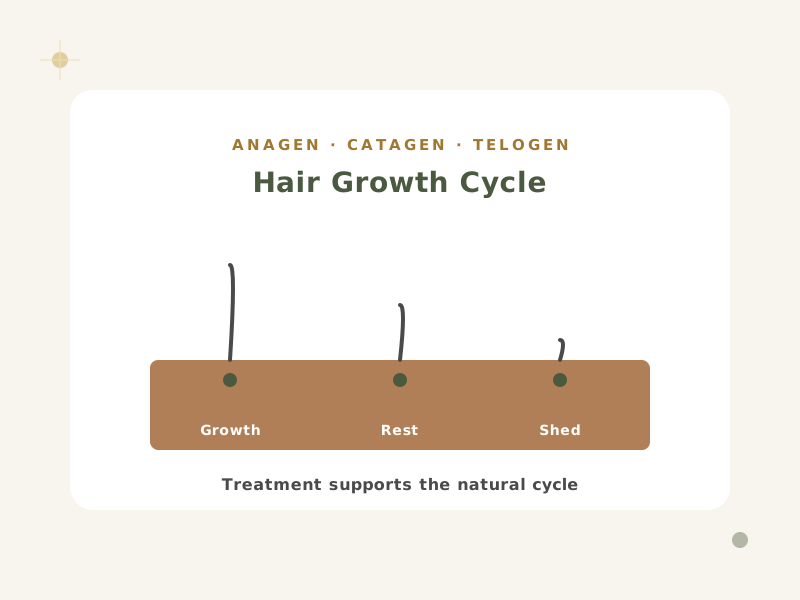
To understand why menopause affects hair, it helps to know a little about how hair grows. Each follicle on your scalp cycles through three phases: a growth phase (anagen), a transition phase (catagen), and a resting phase (telogen), after which the hair sheds and the cycle begins again. The length of the anagen phase determines how long your hair can grow and how dense it appears overall.
Oestrogen plays an important role in prolonging the anagen phase. When oestrogen levels decline during perimenopause and menopause, follicles spend less time in active growth and more time resting or shedding. The result is hair that appears thinner, not just because individual strands are finer, but because there are fewer actively growing hairs at any given time.
At the same time, the relative balance between oestrogen and androgens (male hormones, which all women have in smaller amounts) shifts. With less oestrogen to counterbalance them, androgens can have a more pronounced effect on the follicles. In follicles that are genetically sensitive to a hormone called dihydrotestosterone (DHT), this can trigger gradual miniaturisation: the follicle produces progressively finer and shorter hairs over successive cycles until, in more advanced cases, it becomes dormant.
The scalp environment also changes. Reduced oestrogen can affect sebum production, scalp circulation, and the collagen matrix that surrounds and supports each follicle. All of these changes together create conditions that are less favourable for robust hair growth.
Is It Menopause or Something Else?
While menopause is a very common reason for hair thinning in women over forty, it is not the only one, and it is important not to assume. Several other conditions can cause or worsen hair loss, and some of them respond very differently to treatment. This is why we always encourage clients to see their GP before starting any hair loss treatment, so that other causes can be properly investigated.
Thyroid Disorders
Both an underactive thyroid (hypothyroidism) and an overactive thyroid (hyperthyroidism) can cause noticeable hair thinning or shedding. Thyroid conditions are relatively common in women in midlife and can sometimes coincide with perimenopause, making it harder to distinguish the two without blood tests. The good news is that thyroid-related hair loss often improves significantly once the underlying condition is treated.
Nutritional Deficiencies
Iron deficiency is one of the most frequently overlooked contributors to hair loss in women. Ferritin (stored iron) levels in particular have a well-established relationship with hair growth. Low levels of vitamin D, zinc, and B12 can also play a role. These are straightforward to check with a standard blood test, and correcting a deficiency can make a meaningful difference to hair density over time.
Chronic Stress
Prolonged psychological or physical stress can trigger a type of hair shedding called telogen effluvium, where a larger proportion of follicles enter the resting phase simultaneously and then shed over the following weeks or months. Because perimenopause is often a period of significant life change and psychological pressure, stress-related shedding can overlap with hormonal hair thinning, compounding the effect.
If you are experiencing hair loss and have not yet had a blood test to check your thyroid function, iron stores, and vitamin levels, that is the right first step. Your GP can arrange this and help you interpret the results. Understanding the cause (or combination of causes) is the foundation of any effective treatment plan.
Our £25 consultation gives you dedicated time with our practitioner to discuss your hair concerns, review your history, and explore whether PRP or other treatments might be appropriate for you. The fee is fully redeemable against treatment within 30 days. No obligation to proceed. Consultations available in English, Farsi and Russian.
Finance available, subject to approval, via our Payl8r finance partner.
What Can Help?
There is no single approach that works for everyone, and the most effective strategy depends on what is driving your hair thinning. That said, there are several well-supported avenues worth exploring.
Lifestyle and Nutrition
A nutrient-dense diet that supports hair health is a sensible foundation for any treatment plan. Foods rich in iron, zinc, protein, and B vitamins are all relevant. Adequate protein intake in particular is important, since hair is made largely of a protein called keratin. Reducing alcohol intake, managing stress through regular movement or mindfulness practice, and protecting hair from excessive heat styling can all help preserve what you have and support regrowth.
Topical Treatments
Minoxidil, available over the counter in various strengths, is the most established topical treatment for female pattern hair loss. It requires consistent, long-term use to maintain any benefit, and results vary. It is worth discussing with your GP or a trichologist before starting, particularly if you have any cardiovascular concerns.
Medical Options
Your GP may discuss hormone replacement therapy (HRT), which can help some women by restoring oestrogen levels and thereby slowing hormone-driven hair thinning. HRT is not specifically licensed for hair loss and is not appropriate for everyone, so this is very much a conversation to have with your doctor based on your individual circumstances. Other prescription options, including anti-androgens, may occasionally be considered by specialists.
Scalp Health
A healthy scalp environment supports better hair growth. This includes keeping the scalp clean, using gentle sulphate-free products where possible, and avoiding styles or accessories that create persistent tension on the follicles. Scalp massage may support circulation, though it works best as a complement to other strategies rather than a standalone intervention.
Clinical Treatments
For women looking for a more targeted clinical approach, PRP (platelet-rich plasma) therapy has gained considerable interest as a treatment for hair thinning, including the type associated with menopause. We explore this in more detail in the next section.
Hair loss has multiple possible causes, and the same treatment does not work for everyone. Before investing in any treatment (clinical or otherwise) we strongly recommend a GP appointment to rule out thyroid disorders, iron deficiency, and other treatable underlying causes. Addressing these first can significantly improve the outcome of any subsequent hair restoration treatment.
PRP Therapy for Menopausal Hair Thinning
Platelet-rich plasma (PRP) therapy is a treatment that uses your own blood to deliver a concentrated dose of growth factors directly to the scalp. A small sample of blood is taken and placed in a centrifuge, which separates the plasma (the liquid part of the blood, rich in platelets) from the red blood cells. This platelet-rich plasma is then injected into the areas of the scalp where hair thinning is most apparent.
Platelets are best known for their role in clotting, but they also contain a range of growth factors that play a role in tissue repair and regeneration. When delivered to the scalp, these growth factors are thought to stimulate dormant or weakened follicles, improve blood supply to the follicular unit, and extend the active growth phase of the hair cycle.
At Regener8 Aesthetics, PRP hair restoration is one of our core treatments. We see it as part of a broader approach to hair health, not a standalone cure but a meaningful clinical tool that can complement other strategies. It is particularly well-suited to women in the earlier stages of thinning, where follicles are still present and viable, though results can also be encouraging at later stages.
A typical initial course at our clinic involves a series of sessions, usually spaced four to six weeks apart, followed by maintenance treatments to sustain the results. Each session involves a blood draw, preparation of the PRP, and careful administration to the scalp. Most clients find the procedure very manageable, with minimal downtime.
Because PRP uses your own biological material, there is no risk of allergic reaction or rejection, a factor that many clients find reassuring, particularly when navigating the already complex territory of midlife health changes. Suitability is always assessed at consultation, and we will always give you an honest picture of what PRP can realistically achieve in your individual situation.
Managing Expectations: What Results Are Realistic?
This is perhaps the most important section of this article, because hair restoration, whether through PRP or any other approach, requires realistic expectations to be a positive experience rather than a disappointing one.
Hair grows slowly. A typical hair strand grows roughly one centimetre per month, and the full cycle from dormant follicle to visible hair takes time. This means that even when treatment is working, you are unlikely to see dramatic changes in the first few weeks. Most people who respond well to PRP begin to notice reduced shedding and improved texture within three months, with more visible density changes becoming apparent from around the six-month mark.
It is also important to understand that the goal of treatment at this stage is typically not restoration to how your hair looked at twenty-five. A more realistic and achievable aim is to slow the progression of thinning, improve the overall quality and fullness of what you have, and in many cases achieve meaningful regrowth in areas where follicles remain active. For a good number of women, this makes a genuinely significant difference to how they feel about their hair and their confidence day to day.
Results are not permanent without maintenance. PRP (like many hair loss treatments) requires ongoing sessions to sustain its benefits. The frequency of maintenance varies between individuals, but annual or twice-yearly sessions are common after the initial course.
The women who tend to get the most from treatment are those who engage early, are consistent with their sessions, address any underlying nutritional or medical factors alongside clinical treatment, and approach the process with patience. If you are unsure whether you are a good candidate, a consultation is the right starting point; it allows for an honest, individualised conversation rather than a one-size-fits-all answer.
Hair thinning during menopause is common, understandable, and for many women very treatable. The key is to act early, investigate thoroughly, and choose a clinic that will be honest with you about what is and is not achievable.
Frequently Asked Questions
- Hair thinning during perimenopause and menopause is common and driven primarily by declining oestrogen, which shortens the hair growth phase and allows androgens to have a greater effect on follicles.
- Always see your GP first to rule out other causes such as thyroid disorders, iron deficiency, or stress-related shedding; these require different treatment approaches and are straightforward to test for.
- A combination strategy tends to be most effective: address nutrition and scalp health alongside any clinical treatment for the best possible outcome.
- PRP therapy can be a meaningful clinical option for menopausal hair thinning, particularly when follicles are still active; visible improvements in density typically emerge from three to six months after beginning treatment.
- Acting earlier gives follicles the best chance to respond; a £25 consultation at Regener8 Aesthetics in Selly Oak, Birmingham is the right starting point for an honest, personalised assessment of your options.
Related Treatments at Regener8 Aesthetics
Related Articles
Your hair concerns deserve to be taken seriously. Book a £25 consultation at Regener8 Aesthetics in Selly Oak, Birmingham, and let us help you understand your options. Consultations available in English, Farsi and Russian.
Finance available, subject to approval, via our Payl8r finance partner.