What Is Female Pattern Hair Loss?
Hair loss in women is far more common than many people realise, yet it remains one of the most emotionally distressing experiences a person can face. Unlike the receding hairline typically associated with male hair loss, women experiencing androgenetic alopecia (commonly known as female pattern hair loss) tend to notice a gradual widening of the parting, diffuse thinning across the crown, and a reduction in overall volume and fullness. The frontal hairline itself is usually preserved, which can make the change harder to identify at first and lead to months of uncertainty before a diagnosis is sought.
At Regener8 Aesthetics in Selly Oak, we regularly see women from across Birmingham, including Edgbaston, Moseley, Harborne, Kings Heath, and Bournville, who are quietly managing the emotional weight of hair thinning. Many have spent months searching for answers before reaching out for professional support. This article is written to provide clear, honest, medically grounded information so you can understand what is happening and what genuine treatment options are available.
Female pattern hair loss is a progressive condition, but it is not untreatable. Early intervention gives the best chance of slowing progression and stimulating regrowth. If you have noticed changes to your hair density or a widening parting, it is worth seeking an assessment sooner rather than later; the earlier treatment begins, the more options are available.
What Causes It?
Female pattern hair loss is classified as androgenetic alopecia, meaning it involves a combination of genetic predisposition and hormonal influence, specifically the action of androgens on hair follicles. Understanding the underlying drivers helps make sense of why certain treatments work the way they do, and why addressing contributing factors is an important part of any management plan.
The Role of DHT
Dihydrotestosterone (DHT) is a hormone derived from testosterone. In people who are genetically susceptible, DHT binds to receptors in hair follicles and causes a process called miniaturisation: the gradual shrinking of the follicle over successive growth cycles. The hairs produced become progressively finer and shorter until the follicle eventually becomes dormant. Women produce significantly less DHT than men, which is why female pattern hair loss tends to be more diffuse and slower in its progression, but the underlying mechanism is shared.
Genetics
A family history of hair thinning (on either the maternal or paternal side) meaningfully increases the likelihood of developing the condition. The inheritance pattern is polygenic, meaning multiple genes contribute, so having an affected parent does not guarantee that you will be affected. However, it does raise your personal risk and makes early monitoring worthwhile.
Hormonal Shifts
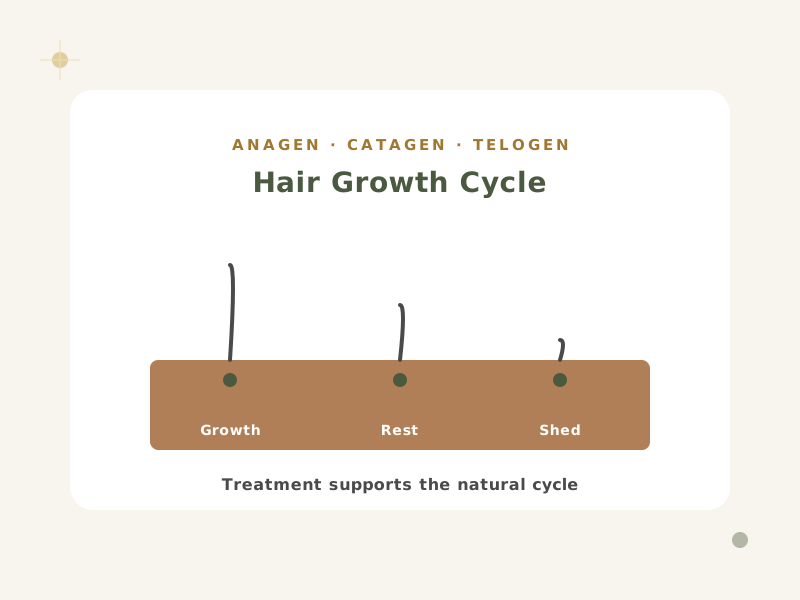
Oestrogen plays a protective role in hair growth. It prolongs the anagen (growth) phase of the hair cycle and counteracts some of the effects of androgens on the follicle. When oestrogen levels fall, as they do during perimenopause, menopause, or after stopping the combined contraceptive pill, this protective effect is reduced and hair thinning can accelerate. Conditions such as polycystic ovary syndrome (PCOS), which involve elevated androgen levels, are strongly associated with earlier-onset hair loss in women.
Postpartum Hair Loss
Significant hair shedding in the months following childbirth is extremely common and is known as telogen effluvium. Elevated oestrogen during pregnancy keeps hairs in the growth phase for longer than usual; after delivery, oestrogen drops rapidly and a large number of hairs enter the shedding phase simultaneously. This process is typically temporary and resolves within six to twelve months. However, in some women, particularly those with an underlying genetic predisposition, postpartum shedding can trigger or unmask androgenetic alopecia that might otherwise have appeared later.
Thyroid and Nutritional Factors
Both an underactive and overactive thyroid can cause diffuse hair thinning that closely resembles pattern hair loss. Iron deficiency anaemia, low ferritin levels, and deficiencies in zinc, vitamin D, and B vitamins are also well-established contributors to excessive shedding and poor hair growth. These factors are important to identify and address because correcting an underlying deficiency can produce meaningful improvement independently of any other treatment.
How Is It Diagnosed?
Accurate diagnosis is the foundation of effective treatment. A thorough assessment involves several components, and it is important to involve your GP at an early stage, particularly to rule out reversible medical causes before pursuing aesthetic treatments.
The Ludwig Scale
The most widely used grading system for female pattern hair loss is the Ludwig classification. It describes three stages: Grade I involves subtle thinning at the crown that may not be immediately obvious to others; Grade II shows more pronounced widening of the central parting and reduced density across the top of the scalp; Grade III represents significant, visible thinning across the entire crown with potential see-through areas at the apex. Identifying where on this scale your presentation sits helps guide treatment decisions and set realistic expectations.
Trichoscopy
Trichoscopy is a non-invasive dermoscopy technique that allows a practitioner to examine the scalp and hair follicles at magnification. It can reveal follicular miniaturisation, variability in hair shaft diameter, and scalp condition, all of which help confirm the diagnosis and distinguish androgenetic alopecia from other causes of hair loss such as alopecia areata, scarring alopecia, or scalp inflammation.
Blood Tests
Your GP may recommend a panel of blood tests to identify reversible contributory factors. These typically include a full blood count, ferritin, thyroid function (TSH and free T4), sex hormones (including testosterone and DHEAS), and vitamin D. If PCOS is suspected, additional hormone tests and a pelvic ultrasound may be arranged. Addressing any deficiencies identified through testing is an essential part of a comprehensive hair health strategy.
If you are experiencing rapid or severe hair loss, patchy hair loss, scalp pain, inflammation, redness, or significant changes in your general health alongside hair loss, please speak to your GP as a priority. These presentations can indicate conditions that require medical investigation before any aesthetic treatment would be appropriate.
Our practitioners take a thorough, unhurried approach to hair loss assessment. Your £25 consultation fee is fully redeemable against any treatment booked within 30 days. Consultations are available in English, Farsi and Russian.
Finance available, subject to approval, via our Payl8r finance partner.
Treatment Options: What Actually Works?
There is no single treatment that works for every woman, and this area rewards a measured, evidence-informed approach. The most effective strategies tend to combine approaches, addressing nutritional or hormonal factors alongside treatments that act directly on the follicle itself.
PRP Hair Restoration
Platelet-rich plasma (PRP) therapy is one of the most evidence-supported aesthetic treatments for hair loss in women. A small sample of your own blood is processed to concentrate the platelets, which are rich in growth factors including platelet-derived growth factor (PDGF), vascular endothelial growth factor (VEGF), and insulin-like growth factor (IGF-1). These are injected into the scalp at the level of the hair follicle, where they stimulate follicular activity, improve local blood supply, and may help to reverse miniaturisation in follicles that retain some function. PRP is suitable across a range of hair loss stages, though it tends to produce the most significant results when treatment begins before follicles become permanently inactive.
Microneedling of the Scalp
Controlled microneedling creates micro-channels in the scalp that stimulate a localised healing response and increase the production of growth factors in the dermis. It can be used alongside PRP to enhance the absorption of platelet-rich plasma, or as a standalone treatment to support follicular activity and improve overall scalp health. A series of sessions spaced several weeks apart is typically recommended.
Nutritional and Supplement Support
If blood tests identify deficiencies (particularly in ferritin, vitamin D, zinc, or B vitamins) addressing these through dietary improvement or targeted supplementation is a logical and important first step. Some practitioners also recommend marine collagen peptides or specialist hair micronutrient formulations. While supplements alone are unlikely to reverse established androgenetic alopecia, they help create the physiological environment in which other treatments can work more effectively.
Medical Treatments
Minoxidil, available as a topical solution or foam, is the only treatment currently licensed in the UK specifically for female pattern hair loss. It works by prolonging the anagen phase and promoting follicular enlargement. A low-dose oral form is also used off-label in some clinical settings. Anti-androgen medications such as spironolactone are occasionally used under specialist supervision, generally in post-menopausal women, due to the risks associated with pregnancy. These options require discussion with your GP or a trichologist and fall outside the scope of aesthetic clinic treatment.
PRP for Female Hair Loss: What to Expect
At Regener8 Aesthetics, PRP hair restoration is carried out by trained practitioners who take time to assess your scalp thoroughly, discuss your medical history, and explain candidly what the treatment can and cannot achieve for your specific presentation.
The process begins with a small blood draw, typically from the arm. The blood is centrifuged to separate and concentrate the platelet-rich plasma fraction. The scalp is then cleansed and a topical anaesthetic cream may be applied to reduce discomfort during the procedure. The PRP is injected across the thinning areas of the scalp using a fine needle, targeting the dermal papilla layer where the follicles reside. A session typically takes around forty-five minutes from start to finish.
Most people experience mild scalp tenderness and some redness for twenty-four to forty-eight hours following treatment. Strenuous exercise, heat styling, and swimming are generally avoided during this period. There is no significant downtime and most clients return to their normal daily routine the following day.
A standard initial course of PRP for hair loss involves three sessions spaced four to six weeks apart, followed by maintenance treatments every three to six months depending on individual response. It is important to understand that hair growth is a slow biological process. A noticeable reduction in daily shedding is often the first indicator that treatment is working, followed by visible improvements in density and thickness from around three to four months after beginning the course.
Hair loss treatment requires patience. The follicle growth cycle spans months, and even the most effective interventions take time to show their full benefit. The most important step is simply to begin.
When Should I Seek Help?
The single most important piece of advice in this article is straightforward: do not wait. Female pattern hair loss is progressive by nature, and follicles that have been miniaturised for an extended period are considerably more difficult to reactivate than those that are in the earlier stages of change. The sooner an assessment takes place, the more options are available and the better the likely outcome.
It is worth seeking professional advice if you have noticed any of the following over a period of weeks or months: a widening parting that has become more pronounced over time, more hair than usual on your pillow or in the shower drain, a noticeable reduction in overall volume or density, hair that feels finer than it used to or breaks more easily, or visible thinning at the crown. You do not need to wait until the change is dramatic or obvious to others before acting.
We would always encourage an initial visit to your GP, particularly to access blood tests and to rule out any reversible medical causes. Aesthetic treatments like PRP work best as part of a broader hair health plan rather than in isolation. If you have already had a medical review and are looking for evidence-based aesthetic support, we would be very glad to see you at our clinic in Selly Oak. We see clients from across Birmingham including Edgbaston, Moseley, Harborne, Kings Heath, Northfield, and Bournville, and our team offers consultations in English, Farsi and Russian to ensure every client feels fully informed and at ease throughout their care.
Frequently Asked Questions
- Female pattern hair loss (androgenetic alopecia) is driven by a combination of genetic susceptibility and hormonal influence (specifically DHT sensitivity) and is the most common form of hair loss in women.
- Early assessment and treatment gives the best outcomes; follicles in the earlier stages of miniaturisation are far more responsive to intervention than those that have been dormant for years.
- A GP review is an important first step to exclude reversible causes such as thyroid dysfunction, iron deficiency anaemia, and hormonal imbalance before pursuing aesthetic treatments.
- PRP therapy is one of the most evidence-supported aesthetic options for female hair loss, using concentrated growth factors from your own blood to stimulate follicular activity and improve scalp health.
- No treatment produces results overnight; hair regrowth requires commitment to a consistent plan over several months, and expectations should be set honestly and individually from the very first consultation.
Related Treatments at Regener8 Aesthetics
Related Articles
Hair loss is rarely just a cosmetic concern; it affects confidence, identity, and daily wellbeing. Our team will give you the time, honesty, and expertise you deserve. Consultations in English, Farsi and Russian at our clinic in Selly Oak, Birmingham.
Finance available, subject to approval, via our Payl8r finance partner.