What Is Hyperpigmentation?
Hyperpigmentation is a broad term describing areas of skin that appear darker than the surrounding tissue due to excess melanin deposition. Melanin is the pigment produced by melanocytes, the specialised cells responsible for skin colour. When these cells are overstimulated, by inflammation, UV exposure, hormonal changes, or other triggers, they produce more melanin than the surrounding skin, resulting in patches or areas of uneven tone.
Hyperpigmentation is one of the most common skin concerns encountered in aesthetic practice and is seen across all ethnicities and skin tones. It is not harmful in a medical sense, but its impact on confidence and self-perception can be considerable, particularly when it affects the face. The condition encompasses several distinct types with different underlying mechanisms, and distinguishing between them is essential for selecting the most appropriate treatment approach.
An important safety consideration underlies all assessment of hyperpigmentation: any pigmented lesion that appears irregular in shape, has multiple colours, has changed in appearance, or looks different from surrounding pigmented spots should be assessed by a GP or dermatologist to exclude melanoma before any aesthetic treatment is contemplated. At Regener8 Aesthetics in Selly Oak, Birmingham, lesions that raise any clinical concern are referred for medical review as a matter of course.
Hyperpigmentation results from excess melanin production and deposition in the epidermis or dermis. Epidermal hyperpigmentation responds better to topical and peel-based treatments; dermal hyperpigmentation, where melanin has migrated into the dermis, is harder to treat. Some conditions, such as melasma, involve mixed epidermal and dermal pigmentation, which is part of why they can be resistant to treatment and prone to recurrence.
Types of Hyperpigmentation
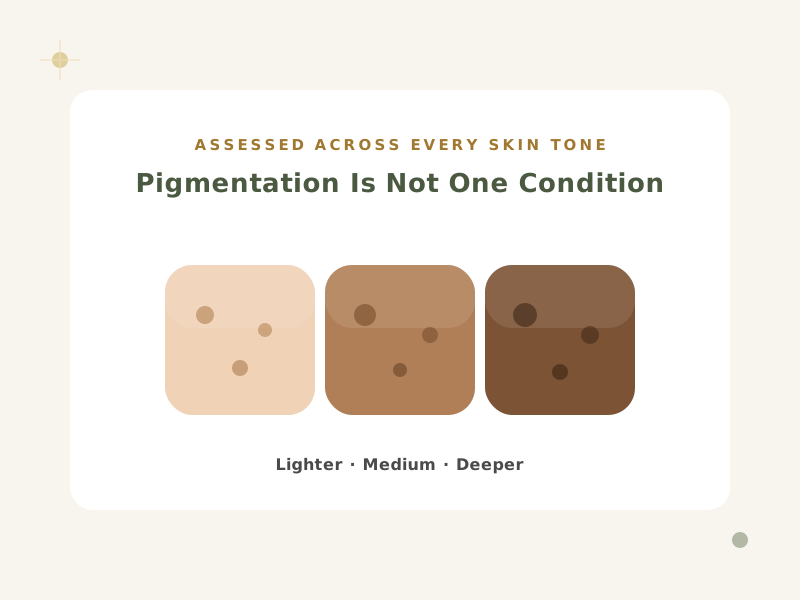
Hyperpigmentation is not a single condition. Understanding the type present is the starting point for any treatment plan.
Post-Inflammatory Hyperpigmentation (PIH)
PIH occurs following any inflammatory injury to the skin. It is a flat area of increased pigmentation, not a structural change, and can appear in shades of pink, red, brown, or dark brown depending on the depth of the pigmentation and the individual's skin tone. Common causes include acne, eczema, psoriasis, insect bites, cuts, burns, and skin procedures. It can last for months to years without targeted treatment, and UV exposure prolongs and worsens it. People with darker skin tones are more prone to PIH and may find it more persistent.
Melasma
Melasma is a hormonally driven form of hyperpigmentation that typically presents as symmetric patches on the cheeks, forehead, upper lip, and chin. It is significantly more common in women, particularly during pregnancy (when it is sometimes called the "mask of pregnancy" or chloasma), when using hormonal contraception, or during perimenopause. UV exposure is a major trigger and perpetuating factor. Melasma can affect people of all skin tones but is more common and often more pronounced in those with naturally darker skin. It is notoriously difficult to treat permanently and recurs readily when triggers are not controlled.
Solar Lentigines and Ephelides
Solar lentigines, commonly referred to as age spots or liver spots, are flat, well-defined patches of darker pigmentation that develop on areas of chronic sun exposure, typically the face, hands, décolletage, and arms. They are more common with age and in those with a history of significant sun exposure. Ephelides (freckles) are genetically determined and triggered by UV exposure; they are generally lighter in colour and fade in winter months, distinguishing them from solar lentigines. Both respond to treatments that reduce melanin production and surface pigmentation.
Drug-Induced Hyperpigmentation
Certain medications can cause hyperpigmentation as a side effect, including some antimalarials, tetracycline antibiotics, amiodarone, and chemotherapy agents. This form of pigmentation may not respond to standard aesthetic approaches until the causative medication is identified and reviewed with the prescribing clinician.
Causes and Triggers
The common thread across all types of hyperpigmentation is overstimulation of melanocytes. Different triggers act through different pathways but converge on the same outcome: increased melanin production beyond what is needed for normal skin pigmentation.
UV radiation is the most universal trigger. Even brief or incidental sun exposure stimulates melanocytes and can worsen any form of hyperpigmentation, which is why sun protection is not optional but foundational to any treatment plan. UVA penetrates glass and cloud cover, meaning consistent daily SPF use is necessary year-round, not only in summer.
Hormonal factors are central to melasma. Oestrogen and progesterone appear to stimulate melanocyte activity, which is why melasma is so strongly associated with pregnancy, hormonal contraception, and hormonal fluctuations at perimenopause. Managing the hormonal trigger, or at minimum controlling UV exposure when the hormonal trigger cannot be eliminated, is essential to preventing recurrence after treatment.
Inflammation triggers PIH by activating melanocytes as part of the skin's response to injury. Any condition or procedure that causes skin inflammation, from acne to laser treatments to abrasive skincare, can result in post-inflammatory hyperpigmentation. In people with darker skin tones, the threshold for triggering PIH is lower, which is a central consideration in aesthetic treatment planning.
Certain skincare ingredients, when used without sun protection or in products that cause skin sensitisation, can also worsen pigmentation. Fragrance, essential oils, and some preservatives can provoke phototoxic or photoallergic reactions that produce hyperpigmentation in the affected area.
UV exposure worsens every type of hyperpigmentation and undermines the results of any treatment. High-factor, broad-spectrum sun protection applied daily, and reapplied when outdoors, is the single most important supportive measure for anyone pursuing hyperpigmentation treatment. Without it, results will be partial and short-lived.
Who Is Affected?
Hyperpigmentation affects people of all ages, genders, and skin tones. It is among the most common skin concerns across dermatology and aesthetic practice globally. However, its prevalence, visibility, and the risk profile of associated treatments differ considerably between individuals.
People with darker skin tones (Fitzpatrick types IV to VI) are more prone to post-inflammatory hyperpigmentation and melasma, and often find pigmentation more persistent. This is because their melanocytes are more reactive and produce more melanin in response to inflammation and UV exposure. Treatments that create controlled skin injury, such as chemical peels and microneedling, require particularly careful calibration to avoid triggering treatment-induced PIH in these skin types.
Women are disproportionately affected by melasma due to its hormonal drivers. It is most common during the reproductive years but can persist into and beyond perimenopause. In men, hyperpigmentation is more commonly driven by sun exposure and post-inflammatory triggers.
Those with a history of significant sun exposure are at higher risk of solar lentigines and uneven skin tone. Acne-prone individuals are at higher risk of PIH following breakouts. People on certain medications should have any new pigmentation reviewed in the context of their medication history.
At Regener8 Aesthetics in Birmingham, the assessment process considers all of these variables. Every treatment plan is built around the individual's skin tone, pigmentation type, lifestyle factors, and medical history rather than applied as a standard protocol.
Diagnosis and Assessment
Assessment begins with identifying the type or types of hyperpigmentation present. The distribution, pattern, colour depth, and triggers inform the diagnosis. Melasma has a characteristic symmetric distribution on sun-exposed facial areas; PIH follows the location of previous inflammatory lesions; solar lentigines appear on chronically sun-exposed sites; freckles are widespread and typically fade in winter.
Fitzpatrick skin type classification is an essential part of every hyperpigmentation consultation. It determines which treatments are appropriate, at what concentrations and depths, and what precautions are needed. This is not a secondary consideration but a primary one, given that treatments that are straightforward for lighter skin types may carry a meaningful risk of worsening pigmentation in darker skin types if not properly calibrated.
Any pigmented lesion with features that raise concern for melanoma or other skin cancer, including irregular borders, asymmetry, multiple colours within the same lesion, a diameter greater than 6mm, or documented change over time, must be assessed by a GP or dermatologist before any aesthetic treatment proceeds. Regener8 Aesthetics applies this principle consistently, and referral for medical assessment will be recommended wherever clinical concern exists.
A thorough history covers the duration and pattern of the pigmentation, its relationship to sun exposure, hormonal events, medications, previous treatments, and any skincare products currently in use. This informs both the diagnosis and the treatment plan.
Evidence-Based Treatments
The treatment of hyperpigmentation requires a combination of targeted aesthetic treatments and diligent ongoing skincare, with sun protection underpinning everything. No aesthetic treatment will deliver lasting results in the absence of consistent UV protection.
Chemical Peels
Chemical peels are among the most effective and well-evidenced aesthetic treatments for epidermal hyperpigmentation. Alpha-hydroxy acids, including glycolic and lactic acid, accelerate epidermal turnover and disperse melanin-containing cells from the upper layers of the skin. Salicylic acid peels are useful where there is also an acne component contributing to PIH. Medium-depth peels using trichloroacetic acid (TCA) can address more stubborn or deeper epidermal pigmentation and some dermal pigmentation.
For people with darker skin tones, peel selection focuses on gentler AHA formulations at lower concentrations to minimise the risk of treatment-induced PIH. Patch testing before treatment is essential and is carried out as a standard step at Regener8 Aesthetics. A course of four to six peels spaced two to four weeks apart is typically recommended, alongside consistent SPF use between sessions. Results are gradual rather than immediate.
Melasma, because of its mixed epidermal and dermal component and its tendency to be driven by ongoing hormonal triggers, responds more variably to peels than other types of hyperpigmentation. A realistic expectation is a degree of lightening during the course of treatment, with the understanding that maintenance will be ongoing and that recurrence is common when triggers are not controlled.
Microneedling
Microneedling can improve overall skin tone and texture and supports the penetration of active brightening ingredients applied immediately after the procedure. For PIH specifically, it can support gradual improvement by promoting skin remodelling. Microneedling requires careful use in darker skin tones and is not a first-line treatment for melasma, where the risk of triggering further pigmentation with the inflammatory stimulus of the procedure must be weighed carefully. Your practitioner will assess whether microneedling is appropriate for your pigmentation type and skin tone at consultation.
PRP and Skin Biostimulators
PRP therapy can improve overall skin quality, radiance, and texture. When combined with microneedling, it may enhance the skin's recovery and remodelling response. It is not a specific treatment for hyperpigmentation and will not directly reduce melanin production. Profhilo and Jalupro similarly improve skin quality and hydration rather than targeting pigmentation directly, but they can be a supportive element of a broader skin health plan.
Sun Protection and Skincare
High-factor broad-spectrum sunscreen, SPF 30 to 50, is the most important element of any hyperpigmentation management plan and must be applied every morning and reapplied throughout the day during sun exposure. Without this, any treatment will be partially or wholly counteracted. Alongside SPF, evidence supports the use of topical ingredients such as azelaic acid, niacinamide, vitamin C, and in some cases retinoids as part of a daily skincare routine for managing pigmentation. Advice on appropriate skincare to use alongside treatment is provided at consultation.
When to Seek Medical Referral
Any pigmented lesion that looks clinically concerning should be assessed by a GP or dermatologist before aesthetic treatment proceeds. Melasma with a clear hormonal driver may benefit from review by a GP to discuss whether adjusting hormonal contraception is appropriate. Suspected drug-induced hyperpigmentation should prompt a medication review with the prescribing clinician. Regener8 Aesthetics will facilitate referral where appropriate and will not proceed with treatment where safety concerns have not been addressed.
Book a £25 consultation at Regener8 Aesthetics in Selly Oak, Birmingham. The fee is fully redeemable against any treatment booked within 30 days. No pressure to proceed. Consultations available in English, Farsi and Russian.
Finance available, subject to approval, via our Payl8r finance partner.
Why Choose Regener8 Aesthetics?
Safety-first approach to pigmentation. The assessment of pigmented lesions at Regener8 Aesthetics always begins with a safety lens. Any lesion that raises clinical concern is referred for medical assessment before aesthetic treatment proceeds. This is non-negotiable and reflects the standard of care that every client deserves.
Skin tone-aware practice. Hyperpigmentation treatment is not one-size-fits-all. The approach at Regener8 takes Fitzpatrick skin classification seriously at every stage, from the choice of peel acid and concentration to the depth of microneedling, the decision to patch test, and the post-treatment skincare recommended. Treatments are appropriate and safe for your individual skin rather than applied generically.
Honest expectations. Melasma in particular is a condition where overpromising is common. At Regener8 Aesthetics, the approach is to be straightforward about the likelihood of recurrence, the importance of ongoing sun protection, and the fact that treatment manages rather than permanently cures conditions with an ongoing hormonal or UV trigger. An honest conversation about what is achievable is always more valuable than a sales-led one.
Thorough consultations. Skin tone, medication history, hormonal history, skincare habits, and sun exposure patterns all matter in the assessment of hyperpigmentation. Consultations at the Selly Oak clinic allow enough time to explore these properly and to build a treatment plan that reflects your individual situation.
Multilingual consultations. Regener8 Aesthetics offers consultations in English, Farsi, and Russian. For clients across Birmingham and the wider West Midlands whose first language is not English, discussing a nuanced skin condition with genuine clarity makes for a better consultation and a better outcome.
- Hyperpigmentation encompasses several distinct types, PIH, melasma, solar lentigines, and others, each with different causes and treatment responses; accurate diagnosis is the essential starting point.
- Sun protection (SPF 30 to 50, applied daily and reapplied outdoors) is the most important element of any hyperpigmentation management plan; without it, treatment results will be partial and temporary.
- Chemical peels using AHA or BHA acids are effective for epidermal hyperpigmentation; treatment is calibrated by skin tone, with patch testing essential for those with Fitzpatrick IV to VI skin.
- Melasma is notoriously difficult to treat permanently due to its hormonal driver; management is ongoing, and recurrence is common when triggers are not controlled.
- Any pigmented lesion with irregular features, asymmetry, or recent change should be assessed by a GP or dermatologist to exclude melanoma before any aesthetic treatment proceeds.